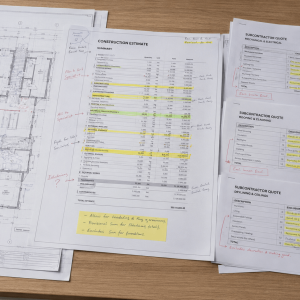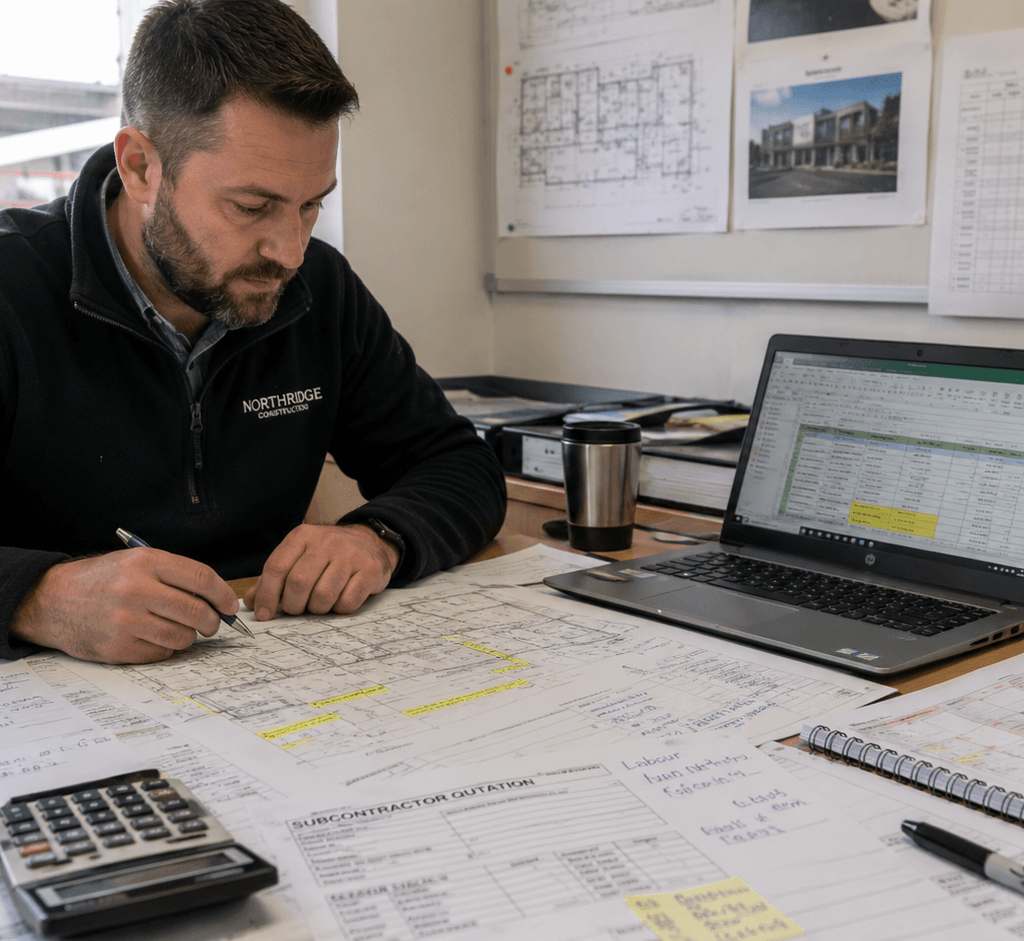

Preliminary estimating is the early cost work that helps decide whether a project is viable before every drawing, specification and trade package is fully developed. It is used to test budget, compare options, identify risk and decide whether the project is ready to move forward.
At this stage, the estimate is not expected to price every item in final detail. It should, however, make the main assumptions visible: scope, floor area, specification level, preliminaries, site setup, access, services, compliance requirements, risk allowances and exclusions.
Need an early estimate from drawings or project information?
Cost Estimator can help turn early drawings, scope notes or tender information into a clearer cost basis, including measured allowances, preliminaries, assumptions and exclusions.
That is useful when you need to check viability, compare options, speak to funders, or decide whether a tender is worth pursuing.
What is preliminary estimating in construction?
A preliminary estimate is an early-stage construction cost estimate prepared before the full detail is complete. It gives the client, builder, developer or design team a working cost range or cost plan so decisions can be made before too much time or money is committed.
It may also be called an order of cost estimate, budget estimate, feasibility estimate or early cost plan, depending on the stage and level of detail.
The purpose is not to pretend the project is fully fixed. The purpose is to show what is known, what has been assumed, and which costs still carry risk.
When preliminary estimating is useful
Preliminary estimating is useful when the project is real enough to need cost advice, but not detailed enough for a fully firm tender price.
Common situations include:
- checking whether a proposed extension, renovation, self-build or development is viable
- comparing design options before drawings are fully developed
- testing whether a budget matches the likely scope
- supporting funding or internal approval conversations
- deciding whether a tender opportunity is worth pursuing
- identifying cost risks before the quote or tender stage
- setting allowances for items not fully specified yet
For builders, preliminary estimating can also help with bid/no-bid decisions. If the scope is unclear, the programme is tight or the risk allowances are high, the estimate may show that the job needs more information before it is worth pricing in detail.
What information is needed?
The information needed depends on the project stage, but useful inputs usually include:
- drawings, even if they are not final
- floor areas and key dimensions
- scope notes or employer requirements
- specification notes or finish expectations
- site address or region
- known constraints such as access, occupation, phasing or working hours
- planning or building control requirements where relevant
- any quotes, supplier prices or previous budgets already available
The estimate should state where information is missing. A preliminary estimate becomes more useful when the assumptions are written down rather than hidden inside the total.
What should a preliminary estimate include?
A useful preliminary estimate normally covers more than the visible building work. Depending on the project, it should consider:
- demolition, strip-out or enabling works
- substructure and foundations
- superstructure
- roofing, windows and external envelope
- internal partitions, finishes and fittings
- mechanical and electrical allowances
- external works, drainage and services
- preliminaries and site setup
- professional fees, surveys or statutory costs where required
- risk allowances, contingency and provisional sums
- exclusions and client-supplied items
It does not need to be perfect at the first stage, but it does need to be honest about what has and has not been priced.
Preliminaries and site setup
Preliminaries are often under-allowed in early budgets because they do not always appear as obvious finished work. They still affect the real cost of delivery.
Early estimates should consider items such as:
- site setup and welfare
- supervision and management time
- access, protection and temporary works
- scaffolding, hoarding or security
- plant, skips and waste management
- traffic management or restricted working areas
- phasing, occupation and programme constraints
If these are missed, the early budget can look more attractive than the project really is.
Compliance and statutory costs
Early-stage estimates should also flag likely compliance costs. These vary by project, but can include building control, planning conditions, structural design, surveys, party wall matters, health and safety documentation, energy performance requirements and specialist reports.
Not every item will apply to every job. The important point is to avoid treating compliance as an afterthought if it is likely to affect cost, programme or risk.
Risk allowances and contingency
Preliminary estimates carry uncertainty by nature. That uncertainty should be handled through clear allowances, not vague optimism.
A good early estimate separates:
- items measured or priced with reasonable confidence
- items based on benchmark rates
- provisional sums
- risk allowances
- excluded items
- information still required
Contingency should be shown as a risk allowance, not treated as spare money. If it is needed later, it is no longer available to protect the budget.
Preliminary estimate vs detailed estimate
A preliminary estimate is used earlier, when some information is still developing. A detailed estimate is prepared when drawings, specifications and scope are clear enough for a fuller measured price.
The difference is mainly the level of detail and confidence:
- Preliminary estimate: early budget, options testing, assumptions, benchmark rates, risk allowances.
- Detailed estimate: measured quantities, clearer trade breakdowns, defined specification, tighter inclusions and exclusions.
One should lead into the other. A preliminary estimate is useful because it shows what needs to be resolved before the final quote, tender or funding decision.
How preliminary estimating supports margin and quote discipline
For builders, preliminary estimating is not just a client-budget exercise. It helps protect margin by making risk visible early.
Before committing to a quote or tender, a builder can use the preliminary estimate to check:
- whether the scope is complete enough to price
- where assumptions need to be qualified
- whether preliminaries have been allowed properly
- which costs need supplier or subcontractor confirmation
- whether the programme creates extra labour or site costs
- whether the opportunity is commercially worth pursuing
This links directly to tender pricing support for builders and protecting profit margins with accurate cost estimation.
Common mistakes in preliminary estimates
- Using a square-metre rate without checking scope: benchmark rates are useful, but they can hide major specification or site differences.
- Missing preliminaries: site setup, access, supervision and waste costs are real project costs.
- Ignoring exclusions: early estimates should say what is not included.
- Under-allowing risk: uncertain items need provisional sums, assumptions or contingency.
- Treating early budgets as fixed quotes: preliminary estimates should be updated as information improves.
FAQs
Is a preliminary estimate the same as a quote?
No. A preliminary estimate is an early cost view based on the information available at the time. A quote is usually a more committed price for a defined scope. The estimate should make assumptions and exclusions clear so it is not mistaken for a fixed price.
How accurate is a preliminary estimate?
Accuracy depends on the quality of the information. Early sketches and broad scope notes will produce a wider range. Better drawings, specifications and site information allow a tighter estimate.
Should preliminaries be included in an early estimate?
Yes. Preliminaries can materially affect the budget, especially where access, welfare, supervision, scaffolding, waste, temporary works or programme constraints are significant.
Can a preliminary estimate help with funding?
Yes, if it is clearly presented with assumptions, exclusions and risk allowances. Developers and self-builders often need early cost information before speaking to lenders, investors or contractors.
When should I move from a preliminary estimate to a detailed estimate?
Move to a detailed estimate when drawings, specification and scope are developed enough for measured quantities and firmer trade pricing. If the information is still changing, keep the estimate clearly labelled as preliminary.
Next step
If you have drawings, scope notes or early project information, Cost Estimator can help prepare a clearer preliminary estimate or move the project toward a more detailed estimate when the information is ready.
Upload Plans or use Quick Quote when the scope is clear enough to book professional estimating work.