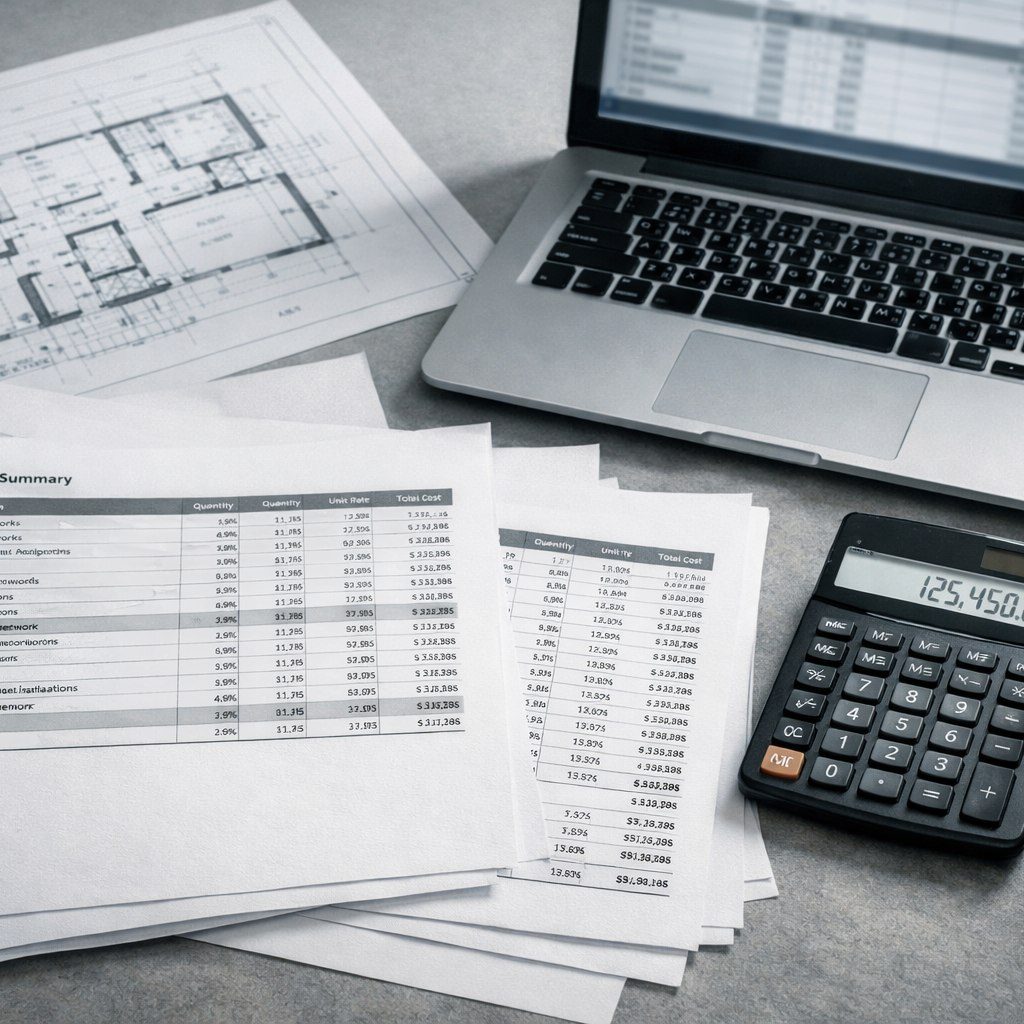
An Elemental Cost Plan is a cost plan that breaks down the total project cost into standardised building elements, such as substructure, superstructure, finishes, and services. This approach enables meaningful comparison with similar projects and effective cost control.
Standard Elements
According to NRM 1 and BCIS, the main element groups are:
- 0. Facilitating works – Demolitions, site preparation
- 1. Substructure – Foundations, basement
- 2. Superstructure – Frame, upper floors, roof, stairs, external walls, windows, internal walls
- 3. Internal finishes – Wall, floor, and ceiling finishes
- 4. Fittings, furnishings and equipment
- 5. Services – Mechanical, electrical, lift installations
- 6. Prefabricated buildings and building units
- 7. Work to existing buildings
- 8. External works
Benefits of Elemental Cost Planning
- Enables benchmarking against BCIS data
- Identifies elements that are over or under budget
- Facilitates value engineering discussions
- Provides audit trail through design development
Cost Per Square Metre
Elemental costs are often expressed as cost per m² of gross internal floor area (GIFA), allowing comparison across projects of different sizes.
Related Terms
See also: Cost Plan, Bill of Quantities, NRM