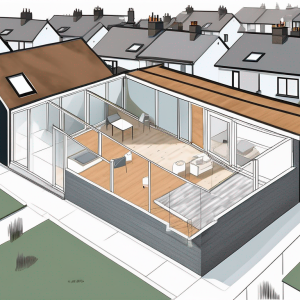

Large bifold doors and rooflights are often treated as simple upgrades in extension budgets. In practice, they can change far more than the cost of the units themselves. They can affect structure, insulation, detailing, drainage and compliance, which is why two extensions of a similar size can end up with very different prices once glazing choices become more specific.
Need a clearer extension budget before you ask for prices?
If drawings, glazing, roof build-up, services or specification choices are still settling, it helps to get the project priced against a clearer scope before the budget drifts.
Quick Quote is the fast order-and-pay route to book in professional estimating work when the extension scope is already clear.
- Useful for homeowners, builders, developers and architects
- Helps separate rough extension budgeting from project-ready pricing
- Useful when specification choices are changing the likely cost more than floor area alone
Quick answer: do bifold doors and rooflights really increase extension cost?
Yes, often materially.
The reason is not just that large glazed units cost more to buy. These choices can also affect:
- glazing specification
- structural support around openings
- roof construction and trimming
- threshold and floor-level detailing
- drainage and waterproofing
- insulation and heat-loss balancing
- the wider Part L strategy for the extension
That is where budgets drift. A homeowner may allow for the doors or rooflights themselves, but not for the extra work around them.
Why the cost is usually bigger than the frame price alone
This is where rough extension budgets can go wrong.
A set of bifolds or a rooflight is not just a product dropped into a finished wall or roof. It has to work with the structure, the thermal build-up, the finished floor levels, the external levels and the wider performance target of the extension. Once those pieces start interacting, the cost can move in several directions at once.
That does not mean large glazed openings are a bad idea. It means they should be treated as a wider design-and-build choice rather than a simple product upgrade.
What bifold doors can change in the extension budget
Door size, span and specification
A small glazed opening and a wide rear opening do not live in the same pricing category.
The budget can change through:
- wider spans
- better-performing glazing
- different frame materials
- more complex opening configurations
- upgraded hardware and threshold choices
That matters because many early extension budgets use a generic allowance for rear doors that is nowhere near the final product level being discussed.
Structural support above the opening
A large opening usually needs more thought structurally than a smaller, more conventional opening.
That can affect:
- the size of the support above the opening
- how the load is carried around the opening
- installation complexity
- making-good and coordination with the surrounding construction
Homeowners often focus on the visible frame, but a wider opening can change the hidden build cost around it as well.
Thresholds, levels and finishing detail
Bifolds often come with expectations around a clean inside-outside connection. That is where the budget can start picking up detail-led extras.
Common cost movers include:
- flush threshold expectations
- tighter coordination between internal and external levels
- drainage detail at the opening
- changes to floor build-up and finished floor height
- extra care around the junction between the extension and patio or garden level
Those items are easy to underallow when the extension is still being discussed in broad terms.
Performance and compliance implications
Large areas of glazing can also make the specification work harder.
If the rear elevation becomes more glass-heavy, the extension may need stronger performance elsewhere in order to stay balanced. That is one reason the recently published guide on how much Part L compliance can add to a house extension matters so much. The glazing choice and the compliance strategy often sit in the same conversation.
What rooflights and roof lanterns can change in the budget
Roof structure and opening formation
A plain roof area is usually simpler than a roof interrupted by one or more large glazed openings.
Rooflights and lanterns can change the cost through:
- trimming out the opening
- extra support around the opening
- more coordination in the roof construction
- added labour and fitting time
Again, the unit itself is only one part of the number.
Roof build-up and insulation coordination
This can become awkward quite quickly on extensions with shallow roof designs or tight build-ups.
The rooflight position has to work with:
- the roof structure
- the insulation depth
- the roof finish
- the internal ceiling line
- the intended performance standard
If the roof design looks clean on paper but leaves little room for a sensible build-up, the extension can become more expensive to resolve properly.
Waterproofing, drainage and installation detail
Rooflights and lanterns also bring waterproofing and drainage detail into play.
Potential cost pressure points include:
- upstand and flashing detail
- falls and drainage around the opening
- coordination with flat roof coverings
- making the opening weather-tight without introducing future risk
This is one of the biggest gaps between visual inspiration and buildable reality. A rooflight may look simple in a concept image, but the surrounding detail often carries more cost than people first expect.
Performance and heat-loss trade-offs
Rooflights can make a space brighter and more attractive, but they still have to fit within the wider thermal strategy of the extension.
In plain terms, more glazing in the roof can mean less room for a lazy placeholder specification elsewhere. That is another reason a generic square-metre budget can drift once design choices become real.
Why two similar extensions can price very differently once glazing is decided
This is the simplest way to think about it.
Two rear extensions can have a very similar floor area and a very similar basic layout. One uses more modest openings and a straightforward roof arrangement. The other uses a full-width glazed rear opening, tighter thresholds and multiple rooflights.
On paper, both jobs can look comparable.
In pricing, they are not.
The second scheme may pull the budget upward through:
- stronger glazing specification
- larger structural allowances
- tighter detail coordination
- more roof complexity
- extra compliance pressure
- more labour and finishing time
That is why floor area alone is never enough for a reliable extension budget once glazing choices start to matter.
The hidden extras homeowners often miss
The most common misses are not mysterious. They are just easy to leave out early.
Typical examples include:
- upgraded glazing specification
- additional steel or support around larger openings
- more difficult roof detailing around rooflights or lanterns
- threshold and drainage work at door openings
- extra labour time for fitting and making good
- internal and external finishing adjustments around the openings
- redesign and re-pricing if glazing choices change late
- wider Part L knock-on effects elsewhere in the extension
A rough budget can survive one or two missed items. Once several of these stack together, the number stops looking rough and starts looking wrong.
What to decide before requesting an estimate
If you want a more useful estimate, try to settle these points first:
- approximate opening sizes
- whether you prefer bifolds, sliders or another door arrangement
- whether rooflights are fixed, opening, flat or lantern style
- how much glazing you really want across the rear and roof
- whether level thresholds and inside-outside continuity matter to the design
- whether the extension is already pushing a more performance-sensitive specification
The clearer these decisions are, the easier it is to price the real job rather than a hopeful version of it.
Need a quick benchmark first?
If the project is still at the broad planning stage, use the building cost calculator for an early benchmark.
For related background, it also makes sense to read:
- How Building Regulations Affect Extension and Refurbishment Costs in the UK
- Energy Upgrade Costs for UK Homes: What to Budget Early in Extensions and Refurbishments
- Cost of House Renovation in the UK: 2024 Guide
When to use Quick Quote and when to request a fuller estimate
If the extension scope is already clear, use Quick Quote for a single storey extension to book the job in for professional estimating work.
If glazing choices, roof design, structure or compliance details are still moving, a fuller estimate request is usually the better route. That gives more room to price the actual scheme properly rather than trying to pin a fixed number on a design that is still shifting.
Final thought
Bifold doors and rooflights can absolutely be worth it. The problem is not choosing them. The problem is budgeting them too narrowly.
The earlier you understand what they change in the wider build, the easier it is to avoid late surprises and compare extension prices on a more realistic basis.
FAQs
Do bifold doors always make an extension much more expensive?
Not always, but they often push the budget up more than homeowners first expect because the cost is not limited to the doors themselves.
Do rooflights affect more than the cost of the rooflight unit?
Yes. They can affect roof structure, detailing, waterproofing, insulation coordination and labour.
Are sliders cheaper than bifolds?
Sometimes, but the right comparison depends on opening size, specification and the wider design. The cheapest-looking option on paper is not always the cheapest once the full build is priced properly.
Why do large glazed openings affect Part L so much?
Because larger areas of glazing can change how the overall extension performs, which can push the specification harder elsewhere.
What should I finalise before asking for an extension estimate?
At a minimum, try to settle opening sizes, preferred door type, rooflight intentions and any key level or specification decisions that materially affect the build.